Next Issue 72 | Call for papers
.
.
.
.
RACIAL VIOLENCE IN THE UNITED STATES: POWER, PUBLIC SPACE, AND TRANSNATIONAL CIRCUITS (1865-1964)
.
Edited by Giovanni Santoro (Università di Torino; Weatherhead Center for International Affairs, Research Cluster on Global History, Harvard University)
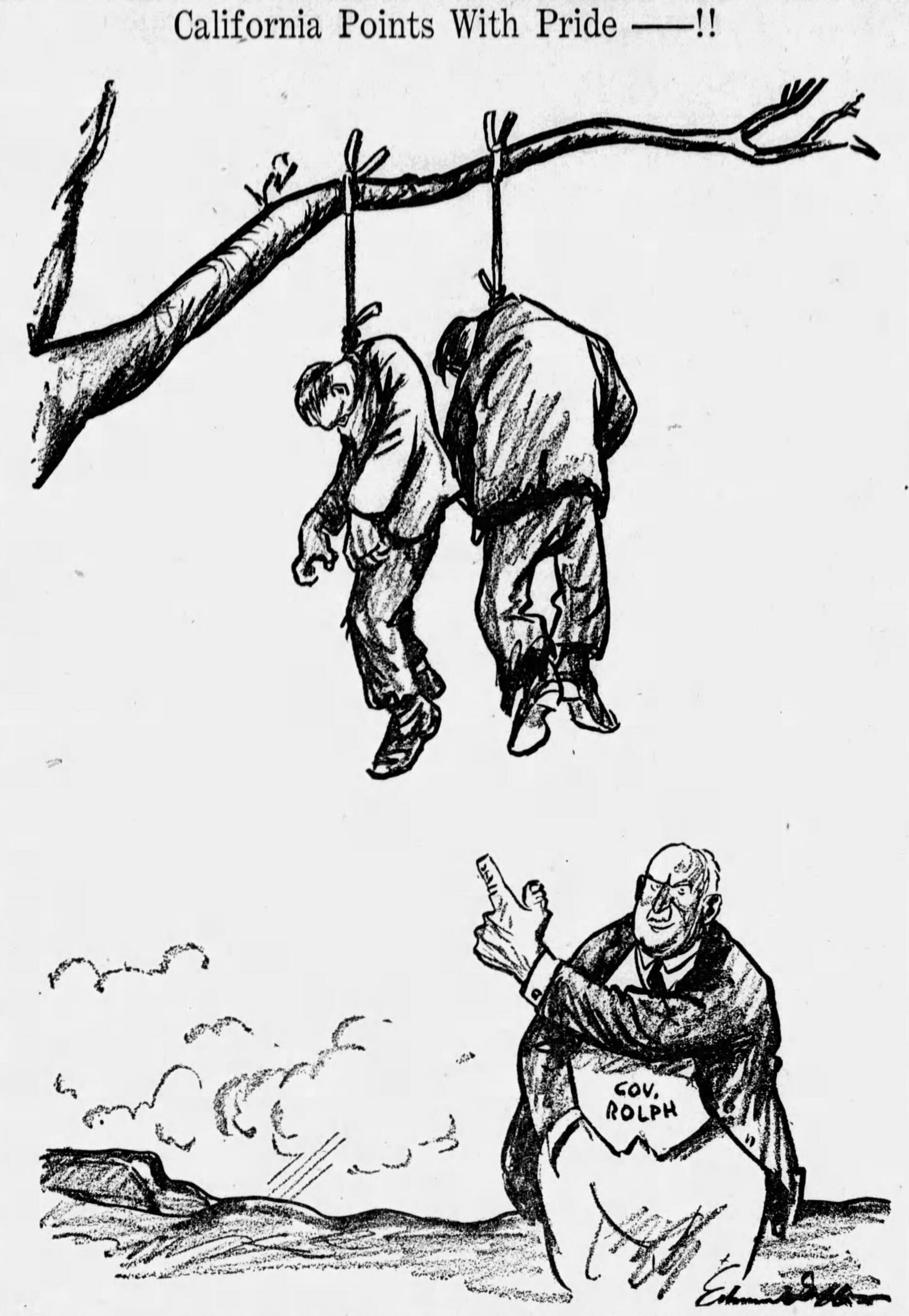
Scholarship on racial violence has shown that public spectacles (Wood 2009), institutional coercion, and everyday intimidation (Balto 2019; Berg 2011) shaped political and social relations in the United States after the abolition of slavery in 1865. Studies extending beyond the former Confederacy have documented violence against African Americans, Mexicans and Mexican Americans, Asian immigrants and Asian Americans, and Native peoples, showing how it regulated access to citizenship, property, labor, mobility, and public space (Carrigan and Webb 2013; Pfeifer 2013; Lew-Williams 2018; Madley 2016).
Within this literature, Brundage (1993) explains regional variations in lynching and the rituals through which it affirmed white domination; Pfeifer (2004) connects the decline of mob violence to the incorporation of popular retribution into a racialized system of capital punishment. Williams (2012), in turn, recovers African American testimony as a means of documenting violence, constructing collective memory, and sustaining political mobilization. Taken together, these studies have deepened our understanding of the social settings, legal institutions, and lived experience of racial violence. Yet scholarship organized around particular regions, institutions, and communities has remained insufficiently integrated.
Building on this scholarship, the special issue seeks to bring into a common analytical framework fields that have often developed separately: histories of mob and vigilante violence, studies of institutional coercion, and scholarship on the resistance of racialized communities. By examining political power, space, and transnational networks together, it will explore how racial violence moved between extralegal and state-sanctioned forms, changed across regions and periods, and connected local struggles over citizenship and authority to national and international arenas.
The special issue focuses on the period between the abolition of slavery in 1865 and the enactment of the Civil Rights Act in 1964. Studies tracing longer trajectories, including federal anti-lynching campaigns culminating in the Emmett Till Antilynching Act (2022), are welcome. Specifically, the special issue develops three interconnected lines of inquiry: political power, public space, and transnational networks. Political power directs attention to how violence enforced racial hierarchies within electoral politics, labor relations, and the administration of justice. How did officials, courts, and police authorize, tolerate, or restrain coercion, and how did targeted communities challenge its legitimacy through legal action, political organizing, and self-defense? These conflicts reveal the changing boundaries between lawful and extralegal violence and the contested reach of state authority (Francis 2014; Pfeifer 2011). Public space structured the exercise of racial power: courthouses and jails linked collective violence to legal authority; streets and neighborhoods shaped its visibility; reservations and borderlands connected coercion to territorial control; transportation networks enabled forced removal and escape. Studying these sites reveals how violence regulated movement, belonging, and public life. Through transnational networks, activists, journalists, diplomats, and political organizations circulated testimony, images, and political strategies. African American appeals to the United Nations, Cold War debates over American democracy, and Black nationalist women’s activism connected racial violence to struggles over human rights, empire, and anticolonialism (Anderson 2003; Blain 2018; Dudziak 2000). Comparative and global studies can trace the movement of violent practices and campaigns against them while attending to distinct institutions and racial formations (Pfeifer 2017a; Pfeifer 2017b).
The call particularly welcomes contributions addressing:
- Lynching, mob violence, vigilantism, racial massacres, and white supremacist or paramilitary movements;
- Political and electoral violence, policing, incarceration, courts, and other forms of institutional coercion;
- Racialized expulsions, forced removal, displacement, and the regulation of mobility;
- Courthouses, jails, streets, neighborhoods, workplaces, reservations, borderlands, and transportation networks as landscapes of coercion and resistance;
- The relations among race, gender, class, citizenship, and migration status in shaping exposure to violence;
- Armed self-defense, legal action, testimony, journalism, organizing, migration, and community mobilization;
- Photography, representation, public memory, and the cultural meanings assigned to racial violence;
- The international circulation of testimony, images, political strategies, and claims concerning democracy and human rights.
Contributions should relate their case studies to these questions, explaining how racial violence changed and how communities challenged the structures of power that sustained it.
.
.
How to submit an article
Authors wishing to participate in this call for papers should submit an abstract of no more than 1,500 characters, including spaces, by 10 December 2026. Applicants will be informed of the outcome of their proposal by 23 December 2026.
Following acceptance of the proposal, complete articles must be submitted by 30 April 2027. The special issue is scheduled for publication in December 2027. The publication date may be subject to changes arising from editorial requirements.
All articles will undergo double-blind peer review. Manuscripts should be between 35,000 and 55,000 characters, including spaces, and must comply with Diacronie. Studi di Storia Contemporanea‘s editorial and bibliographical guidelines and instructions for authors (https://www.studistorici.com/en/instructions-to-authors/editorial-and-bibliographical-guidelines/). Abstracts and articles may be submitted in Italian or English.
Abstracts and manuscripts should be sent to: redazione.diacronie[at]studistorici.com
Requests for additional information may be addressed to the same email address.
.
Bibliographical References
- ANDERSON, Carol, Eyes off the Prize: The United Nations and the African American Struggle for Human Rights, 1944-1955, Cambridge, Cambridge University Press, 2003.
- BALTO, Simon, Occupied Territory: Policing Black Chicago from Red Summer to Black Power, Chapel Hill, University of North Carolina Press, 2019.
- BERG, Manfred, Popular Justice: A History of Lynching in America, Chicago, Ivan R. Dee, 2011.
- BLAIN, Keisha N., Set the World on Fire: Black Nationalist Women and the Global Struggle for Freedom, Philadelphia, University of Pennsylvania Press, 2018.
- BRUNDAGE, W. Fitzhugh, Lynching in the New South: Georgia and Virginia, 1880-1930, Urbana, University of Illinois Press, 1993.
- CARRIGAN, William D., WEBB, Clive, Forgotten Dead: Mob Violence against Mexicans in the United States, 1848-1928, New York, Oxford University Press, 2013.
- DUDZIAK, Mary L., Cold War Civil Rights: Race and the Image of American Democracy, Princeton, Princeton University Press, 2000.
- FRANCIS, Megan Ming, Civil Rights and the Making of the Modern American State, New York, Cambridge University Press, 2014.
- LEW-WILLIAMS, Beth, The Chinese Must Go: Violence, Exclusion, and the Making of the Alien in America, Cambridge, MA, Harvard University Press, 2018.
- MADLEY, Benjamin, An American Genocide: The United States and the California Indian Catastrophe, 1846-1873, New Haven, Yale University Press, 2016.
- PFEIFER, Michael J., Rough Justice: Lynching and American Society, 1874-1947, Urbana, University of Illinois Press, 2004.
- PFEIFER, Michael J., The Roots of Rough Justice: Origins of American Lynching, Urbana, University of Illinois Press, 2011.
- PFEIFER, Michael J. (ed.), Lynching Beyond Dixie: American Mob Violence Outside the South, Urbana, University of Illinois Press, 2013.
- PFEIFER, Michael J. (ed.), Global Lynching and Collective Violence. Volume 1: Asia, Africa, and the Middle East, Urbana, University of Illinois Press, 2017a.
- PFEIFER, Michael J. (ed.), Global Lynching and Collective Violence. Volume 2: The Americas and Europe, Urbana, University of Illinois Press, 2017b.
- WILLIAMS, Kidada E., They Left Great Marks on Me: African American Testimonies of Racial Violence from Emancipation to World War I, New York, New York University Press, 2012.
- WOOD, Amy Louise, Lynching and Spectacle: Witnessing Racial Violence in America, 1890-1940, Chapel Hill, University of North Carolina Press, 2009.
.
 Credits
- Cover image: California Points With Pride! by Edmund Duffy / Baltimore Sun, November 28, 1993


